

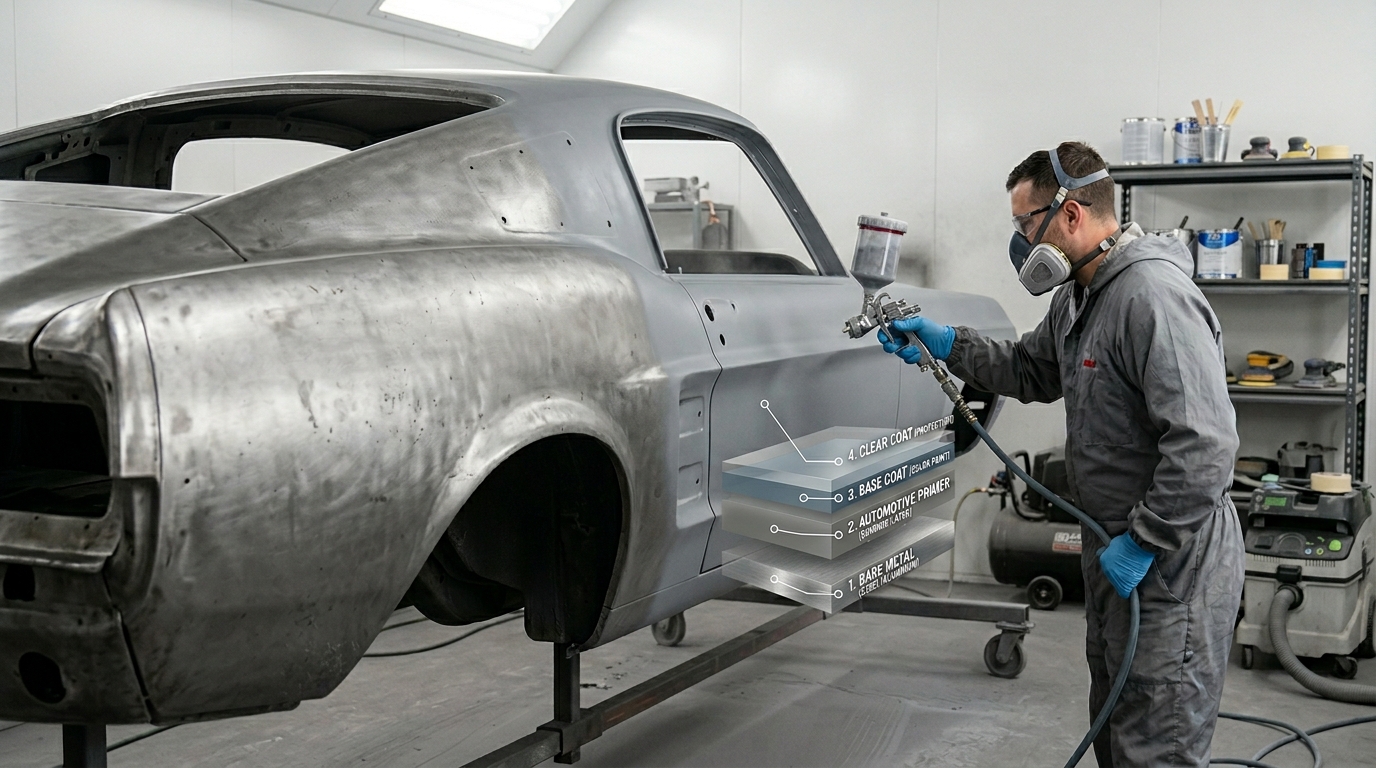
Automotive primer is one of the most important products used in vehicle painting, refinishing, and restoration projects. While many people focus on selecting the perfect paint color, the quality of the final finish often depends on the primer applied underneath. creates a strong bond between the vehicle surface and the paint, ensuring better adhesion, durability, and protection. It also helps smooth imperfections and prepares surfaces for a professional-looking finish. Whether working on a minor repair, a complete repaint, or a classic car restoration, understanding the role of automotive primer is essential. By choosing the right primer and applying it correctly, vehicle owners and professionals can achieve a paint job that looks impressive and withstands harsh environmental conditions for many years.
What Is Automotive Primer?
Automotive primer is a specialized coating applied to a vehicle’s surface before paint. It acts as an intermediate layer that improves the bond between the substrate and the topcoat. Primers are designed to adhere to materials such as metal, plastic, fiberglass, and body filler. In addition to enhancing paint adhesion, automotive helps create a uniform surface that allows paint to spread evenly. Without primer, paint may not adhere properly and could peel, crack, or chip over time. Modern automotive primers are formulated to provide corrosion resistance, surface sealing, and durability. They play a critical role in ensuring that the final paint finish appears smooth, attractive, and long-lasting.
Why Automotive Primer Is Important
Automotive primer serves several important purposes that directly impact the quality of a paint job. One of its primary functions is promoting strong adhesion between the surface and the paint layers. It also protects bare metal from moisture and corrosion, reducing the risk of rust development. Primer helps cover minor scratches, sanding marks, and surface imperfections, creating a smoother base for painting. In addition, it improves color consistency by providing an even foundation beneath the paint. Skipping the primer stage can result in uneven finishes, poor durability, and premature paint failure. For both professional painters and vehicle enthusiasts, automotive is an essential step in achieving high-quality results.
Types of Automotive Primer
There are several types of automotive available, each designed for specific applications. Epoxy primer is highly valued for its excellent adhesion and corrosion resistance, making it ideal for bare metal surfaces. Self-etching primer contains chemicals that bond directly to metal while providing rust protection. Urethane primer is commonly used to create a smooth surface before painting and is favored for high-quality refinishing work. High-build primer is designed to fill sanding scratches and minor imperfections. Primer surfacers combine multiple functions, helping prepare surfaces efficiently. Understanding the characteristics and advantages of each type of automotive primer helps ensure the best product is selected for a particular project.
Benefits of Using Automotive Primer
Using automotive primer offers numerous benefits that contribute to a superior paint finish. Primer improves paint adhesion, reducing the likelihood of peeling or flaking over time. It provides a protective barrier against moisture, helping prevent rust and corrosion. Automotive primer also creates a smoother surface by filling small imperfections and sanding marks. This results in a more professional appearance and improved paint coverage. Another advantage is enhanced durability, as primer strengthens the entire paint system. By creating a stable foundation, automotive primer helps maintain the vehicle’s appearance for longer periods. These benefits make primer an essential component of any successful automotive painting project.
Surface Preparation Before Priming
Proper surface preparation is critical before applying automotive primer. The process begins with thoroughly cleaning the surface to remove dirt, grease, oil, and contaminants. Any rust should be removed completely to prevent future corrosion issues. Damaged areas should be repaired and sanded to create a smooth and level surface. After sanding, dust and debris must be cleaned away to ensure proper primer adhesion. Masking nearby areas helps protect parts of the vehicle that should not receive primer. Careful preparation allows the automotive primer to bond effectively and perform its intended functions. Investing time in preparation significantly improves the quality and durability of the finished paint job.
How to Apply Automotive Primer Correctly
Applying automotive primer correctly is essential for achieving professional results. The primer should be mixed according to the manufacturer’s instructions and applied using appropriate spray equipment. Thin, even coats are generally recommended to prevent runs, drips, and uneven coverage. Adequate drying time should be allowed between coats to ensure proper curing. Environmental conditions such as temperature and humidity can influence application quality and drying performance. Once the primer has fully cured, light sanding may be performed to create an exceptionally smooth surface for painting. Following proper application techniques helps maximize adhesion, protection, and finish quality while reducing the risk of paint defects.
Common Mistakes to Avoid
Several common mistakes can reduce the effectiveness of automotive and compromise the final paint finish. Applying primer to dirty or contaminated surfaces can prevent proper adhesion. Using the wrong type of primer for the material being painted may result in poor performance. Applying excessively thick coats often causes cracking, longer drying times, and surface defects. Insufficient drying time between coats can affect paint adhesion and finish quality. Skipping sanding steps may leave visible imperfections beneath the final paint layer. Ignoring manufacturer recommendations can also lead to disappointing results. Avoiding these mistakes helps ensure that automotive primer performs effectively and supports a durable, attractive paint finish.
Automotive Primer in Restoration Projects
Automotive primer is especially valuable in restoration projects involving older vehicles. Classic cars often have surfaces affected by rust, wear, and previous repairs that require extensive preparation before painting. Primer helps seal repaired areas, protect exposed metal, and create a consistent surface across the vehicle. Restoration professionals often use multiple primer types to achieve the best results depending on the condition of the vehicle. Automotive primer also contributes to preserving the long-term value of restored vehicles by enhancing durability and appearance. Proper priming is considered one of the most important steps in any restoration project because it lays the foundation for a high-quality, show-worthy finish.
Future Trends in Automotive Primer Technology
Automotive primer technology continues to evolve as manufacturers develop more advanced and environmentally friendly products. Modern primers increasingly feature low-emission formulations that reduce environmental impact while maintaining excellent performance. Faster-drying products help improve efficiency in repair and refinishing operations. New technologies provide enhanced corrosion protection, better adhesion, and improved compatibility with modern paint systems. Some advanced primers offer superior filling capabilities that reduce preparation time and labor requirements. As automotive materials and coatings continue to advance, primer technology will remain a key area of innovation. These developments help professionals and vehicle owners achieve better results while supporting sustainable automotive refinishing practices.
Conclusion
Automotive primer is a crucial element in any vehicle painting, repair, or restoration project. It provides the foundation necessary for strong paint adhesion, corrosion protection, and a smooth professional finish. By selecting the appropriate primer type, preparing surfaces correctly, and following proper application techniques, vehicle owners can significantly improve the appearance and longevity of their paint jobs. primer not only enhances visual appeal but also protects valuable vehicle surfaces from environmental damage. As refinishing technologies continue to advance, primer will remain an essential component of achieving durable, high-quality automotive finishes that stand the test of time.