

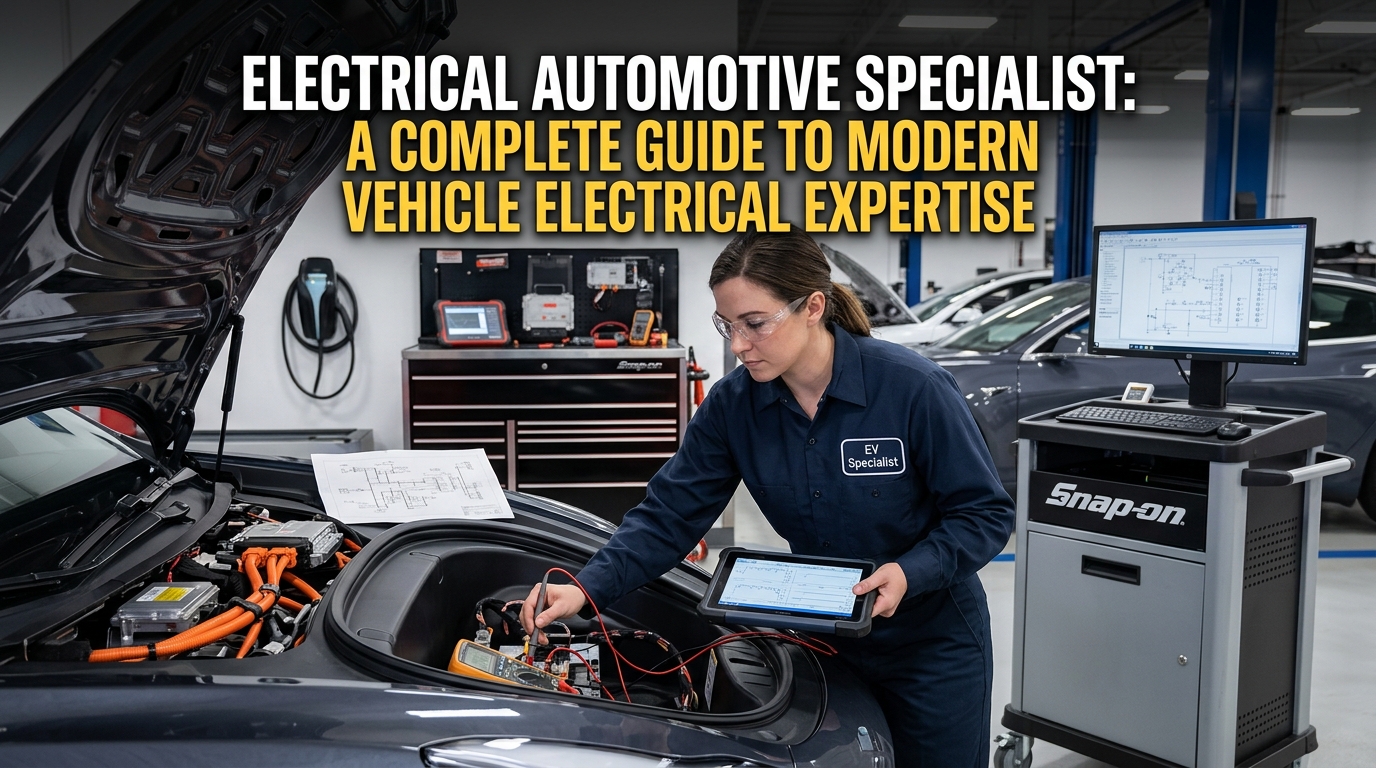
The automotive industry has evolved dramatically over the past few decades, with modern vehicles relying heavily on advanced electrical and electronic systems. From engine management and safety features to infotainment systems and electric vehicle technology, electrical components now play a central role in vehicle performance. This growing complexity has increased the demand for skilled professionals known as electrical automotive specialists. These experts possess specialized knowledge in diagnosing, repairing, and maintaining vehicle electrical systems. Their work ensures that modern automobiles operate efficiently, safely, and reliably. Whether dealing with traditional vehicles, hybrid models, or fully electric cars, an electrical automotive specialist is essential for addressing technical challenges and supporting the continued advancement of automotive technology in today’s rapidly changing transportation industry.
What Is an Electrical Automotive Specialist?
An electrical automotive specialist is a professional technician who focuses on vehicle electrical and electronic systems. Unlike general mechanics who primarily work on mechanical components, these specialists handle wiring networks, sensors, batteries, electronic control units, and advanced diagnostic systems. Their expertise allows them to identify and repair complex electrical faults that affect vehicle performance and functionality. Modern automobiles contain numerous interconnected electronic components that require specialized knowledge and tools to service correctly. Electrical automotive specialists play a vital role in maintaining these systems and ensuring proper communication between various vehicle modules. Their skills are increasingly important as vehicles continue to integrate more sophisticated technologies and electronic features.
Key Responsibilities of an Electrical Automotive Specialist
The responsibilities of an electrical automotive specialist extend beyond basic electrical repairs. They perform diagnostic testing, identify wiring issues, replace faulty electronic components, and ensure that all vehicle systems operate correctly. Specialists inspect batteries, alternators, starters, lighting systems, sensors, and electronic control units. They also update software, calibrate electronic systems, and troubleshoot communication problems within vehicle networks. Preventive maintenance is another important responsibility, helping to identify potential issues before they result in costly repairs. By combining technical expertise with advanced diagnostic equipment, electrical automotive specialists provide comprehensive support for modern vehicles and help maintain safety, reliability, and performance standards.
Importance of Electrical Systems in Modern Vehicles
Electrical systems have become the backbone of modern vehicle operation. Essential functions such as engine control, fuel management, braking systems, airbag deployment, climate control, and navigation rely on electrical and electronic technologies. Advanced driver assistance features and connected vehicle technologies further increase the importance of reliable electrical performance. A malfunction in one component can affect multiple vehicle systems, making accurate diagnosis critical. Electrical automotive specialists ensure these systems function properly and meet manufacturer specifications. Their expertise helps prevent breakdowns, enhances safety, and supports efficient vehicle operation. As automotive innovation continues to accelerate, electrical systems will become even more important in shaping the future of transportation.
Essential Skills Required for Success
A successful electrical automotive specialist must possess a combination of technical knowledge, analytical thinking, and practical problem-solving abilities. Understanding electrical circuits, electronic components, and automotive communication networks is fundamental. Specialists must interpret wiring diagrams, perform electrical testing, and use advanced diagnostic tools effectively. Strong attention to detail helps identify hidden faults that may be difficult to detect. Communication skills are also important when explaining technical issues and repair recommendations to customers. Because automotive technology evolves rapidly, continuous learning is essential. Specialists who stay updated with new systems, repair methods, and industry developments are better equipped to handle the challenges presented by modern vehicles.
Diagnostic Tools and Equipment Used
Electrical automotive specialists rely on specialized tools and equipment to diagnose and repair vehicle systems accurately. Digital multimeters are used to measure voltage, resistance, and current flow within circuits. Diagnostic scan tools connect to onboard vehicle computers and retrieve fault codes that assist in troubleshooting. Oscilloscopes allow technicians to analyze electronic signals and detect complex electrical issues. Battery analyzers help evaluate charging system performance and battery health. Service manuals, software applications, and wiring diagrams provide valuable technical information during repairs. These advanced tools enable specialists to locate faults efficiently and perform accurate repairs, reducing downtime and improving overall vehicle reliability and performance.
Common Electrical Problems in Vehicles
Vehicle owners frequently encounter electrical issues that require professional attention. Common problems include dead batteries, faulty alternators, starter motor failures, blown fuses, damaged wiring, and malfunctioning sensors. Dashboard warning lights often indicate underlying electrical concerns that need diagnosis. Power window failures, lighting issues, and electronic accessory malfunctions are also common. In modern vehicles, software-related faults can affect performance and require system updates or recalibration. Electrical problems may develop gradually or occur unexpectedly, making professional diagnosis important for identifying root causes. Prompt repairs by an electrical automotive specialist help prevent further damage and ensure safe, reliable vehicle operation.
Role in Hybrid and Electric Vehicle Technology
Hybrid and electric vehicles have significantly expanded the role of electrical automotive specialists. These vehicles utilize high-voltage battery systems, electric motors, advanced charging systems, and sophisticated energy management technologies. Specialists working on these vehicles require additional training and safety certifications to handle high-voltage components properly. Their responsibilities include diagnosing battery performance issues, inspecting charging infrastructure, and maintaining electrical drive systems. As governments and consumers increasingly embrace sustainable transportation solutions, demand for professionals with expertise in hybrid and electric vehicle technology continues to rise. Electrical automotive specialists are becoming key contributors to the future growth and success of the automotive industry.
Career Opportunities and Industry Demand
The demand for qualified electrical automotive specialists continues to grow as vehicles become more technologically advanced. Career opportunities exist in automotive dealerships, independent repair facilities, fleet maintenance operations, manufacturing plants, and technical support organizations. Specialists may also pursue roles in research and development, training, or electric vehicle service sectors. Industry certifications and specialized training can improve career prospects and earning potential. Employers increasingly seek technicians with strong electrical diagnostic skills and experience working with modern automotive technologies. For individuals interested in combining technology with hands-on problem solving, this profession offers excellent long-term career stability and advancement opportunities.
Conclusion
An electrical automotive specialist plays a crucial role in maintaining, diagnosing, and repairing the sophisticated electrical systems found in modern vehicles. Their expertise supports vehicle safety, performance, reliability, and technological functionality across traditional, hybrid, and electric automobiles. As automotive innovation continues to advance, the need for highly skilled electrical specialists will only increase. These professionals provide valuable services that help drivers avoid costly breakdowns and ensure optimal vehicle operation. Whether working with complex electronic networks or emerging electric vehicle technologies, electrical automotive specialists remain essential to the future of the automotive industry and the ongoing evolution of transportation systems worldwide.