

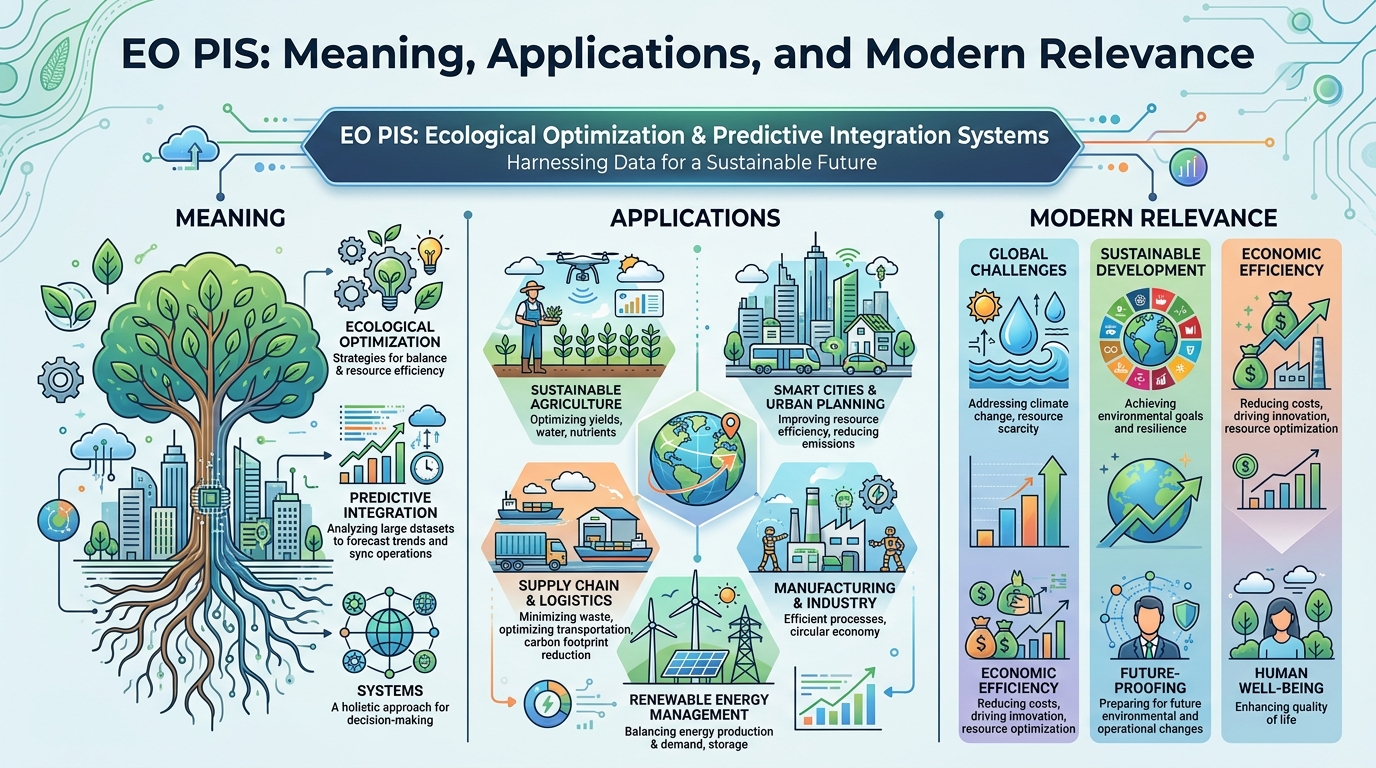
EO PIS has emerged as a topic of growing discussion in modern technological, organizational, and analytical environments. Businesses, researchers, and professionals continue exploring EO PIS because of its influence on operational efficiency, information systems, and strategic planning. As industries become more dependent on digital transformation and structured communication, EO PIS plays an increasingly important role in shaping how organizations process information and manage complex activities.
The concept of EO PIS is often associated with integrated systems, operational frameworks, and structured methods of organizing information. Organizations that adopt EO PIS approaches usually focus on improving coordination, accuracy, and long-term performance. In many professional environments, EO PIS is viewed as a bridge between innovation and systematic management practices.
Modern industries rely heavily on information processing and effective communication networks. EO PIS contributes to these goals by helping organizations maintain consistency, monitor performance, and improve decision-making processes. As competition increases in global markets, businesses are seeking reliable systems that support productivity and adaptability. EO PIS continues to attract attention because it aligns with these evolving needs.
Understanding EO PIS requires examining its historical development, practical applications, technological integration, and future opportunities. The following article explores the foundations, significance, and expanding role of EO PIS in modern society.
Historical Development of EO PIS
The origins of EO PIS can be connected to the broader evolution of organizational systems and information management practices. During the early industrial era, companies relied primarily on manual documentation and paper-based communication methods. These approaches often created delays, inefficiencies, and inconsistencies in organizational operations.
As technological innovation accelerated during the twentieth century, organizations began adopting computerized systems to improve productivity. Information management became a central priority because businesses needed reliable ways to store, analyze, and distribute data. EO PIS gradually emerged as part of this transformation, representing a structured approach to integrating operational activities with information processing systems.
The development of digital communication networks further strengthened the relevance of EO PIS. Organizations gained access to faster information exchange, automated processes, and centralized databases. These advancements allowed businesses to coordinate activities more effectively while reducing administrative errors.
The following table highlights key stages in the development of EO PIS:
| Historical Stage | Major Development | Impact on EO PIS |
|---|---|---|
| Industrial Era | Manual documentation systems | Limited operational efficiency |
| Early Computer Age | Introduction of digital records | Improved information storage |
| Networking Expansion | Faster communication technologies | Enhanced coordination |
| Automation Period | Integration of software systems | Increased productivity |
| Digital Transformation Era | Advanced analytics and cloud systems | Expanded strategic applications |
The historical progression of EO PIS reflects broader technological changes that transformed business operations and organizational management around the world.
Core Principles of EO PIS
EO PIS is built upon several fundamental principles that guide its practical implementation. One major principle involves information accuracy. Organizations depend on reliable data to make informed decisions, and EO PIS systems are designed to maintain consistency in information processing.
Another important principle is operational integration. Modern organizations often contain multiple departments that must communicate efficiently with one another. EO PIS encourages coordinated workflows and centralized management systems that reduce confusion and duplication.
Adaptability also represents a key aspect of EO PIS. Industries continue changing rapidly due to technological innovation and market competition. Effective EO PI-S frameworks allow organizations to adjust processes, integrate new technologies, and respond to evolving challenges.
Security and accountability remain equally important. Information systems must protect sensitive data while ensuring transparency in organizational activities. EO PI-S supports monitoring mechanisms that improve accountability and reduce operational risks.
The table below summarizes the primary principles associated with EO PI-S:
| Principle | Description | Organizational Benefit |
| Information Accuracy | Reliable and consistent data management | Better decision-making |
| Operational Integration | Coordination across departments | Improved efficiency |
| Adaptability | Flexibility in changing environments | Increased competitiveness |
| Security | Protection of organizational data | Reduced risks |
| Accountability | Monitoring and reporting mechanisms | Greater transparency |
These principles form the foundation upon which EO PIS systems are developed and implemented in different industries.
EO PIS in Business Management
Business organizations increasingly rely on EO PI-S to improve management efficiency and organizational coordination. In competitive markets, companies must process large amounts of information quickly and accurately. EO PI-S helps achieve this objective by organizing workflows and supporting communication across departments.
Managers often use EO PI-S frameworks to monitor productivity, evaluate performance, and allocate resources effectively. By centralizing operational data, organizations gain a clearer understanding of their strengths and weaknesses. This visibility enables leadership teams to make strategic decisions based on measurable outcomes.
Financial management also benefits from EO PI-S implementation. Businesses can track expenses, analyze budgets, and identify cost-saving opportunities more effectively through integrated systems. Automated reporting tools reduce the likelihood of human error while improving financial transparency.
Customer relationship management represents another important application of EO PI-S. Organizations use information systems to monitor customer preferences, track service quality, and improve communication strategies. Better customer insights contribute to stronger brand loyalty and improved market positioning.
The following table outlines key business applications of EO PI-S:
| Business Area | Role of EO PIS | Resulting Advantage |
| Operations Management | Coordination of workflows | Higher productivity |
| Financial Analysis | Budget tracking and reporting | Improved accuracy |
| Human Resources | Employee information management | Better organizational planning |
| Customer Relations | Monitoring customer interactions | Enhanced satisfaction |
| Strategic Planning | Data-driven decision-making | Long-term growth |
Businesses that integrate EO PI-S effectively often experience stronger operational performance and improved organizational stability.
Technological Integration and EO PI-S
Technology has become one of the most important drivers behind the expansion of EO PI-S systems. Modern organizations rely on digital platforms, cloud computing, and analytical software to process information efficiently. EO PI-S frameworks integrate these technologies into structured operational environments.
Cloud computing allows organizations to access data from multiple locations while maintaining centralized management systems. This flexibility improves collaboration among teams and supports remote working arrangements. As global business operations expand, cloud integration continues strengthening the importance of EO PI-S.
Artificial intelligence and automation also contribute significantly to modern EO PI-S development. Automated systems can process repetitive tasks quickly while reducing administrative burdens. Machine learning tools help organizations analyze large data sets and identify patterns that support strategic planning.
Cybersecurity remains an essential consideration in technological integration. Organizations handling sensitive information must ensure that their EO PI-S systems include strong security measures to protect against unauthorized access and digital threats.
The table below explains major technological elements connected with EO PIS:
| Technology | Function in EO PIS | Organizational Effect |
| Cloud Computing | Centralized remote data access | Improved collaboration |
| Automation | Reduction of repetitive tasks | Increased efficiency |
| Artificial Intelligence | Advanced data analysis | Better forecasting |
| Cybersecurity Systems | Protection of sensitive information | Stronger reliability |
| Data Analytics | Performance evaluation and insights | Strategic improvement |
Technological integration continues expanding the capabilities and applications of EO PI-S in modern industries.
EO PI-S in Education and Research
Educational institutions and research organizations increasingly use EO PI-S frameworks to manage academic information and support collaborative learning environments. Universities process large amounts of student data, research records, and administrative information, making organized systems essential for efficient management.
EO PI-S supports digital learning platforms that allow students and educators to communicate more effectively. Online classrooms, virtual resources, and centralized academic databases improve accessibility and enhance educational experiences.
Research institutions also benefit from EO PI-S because scientific projects often require coordinated data management and collaboration among multiple teams. Researchers can share findings, monitor project progress, and maintain organized documentation through integrated systems.
Administrative efficiency improves significantly when educational organizations implement EO PI-S solutions. Student registration, attendance monitoring, examination management, and academic reporting become more streamlined and accurate