

Hastovenetor is an emerging concept that has gradually gained attention across various domains due to its flexible nature and wide applicability. Although relatively new in structured discussions, hastovenetor reflects a combination of adaptive thinking, process optimization, and innovative integration. In recent years, hastovenetor has been associated with evolving strategies in business, technology, and creative disciplines, making it a topic worth exploring in depth. This article aims to provide a clear and comprehensive understanding of hastovenetor while maintaining a natural flow of information suitable for both beginners and advanced readers.
The Origins and Meaning of Hastovenetor
The idea of hastovenetor does not stem from a single discipline but rather appears to be a synthesized term reflecting multiple conceptual influences. It can be interpreted as a framework that blends efficiency with adaptability, allowing systems or individuals to respond effectively to changing environments. Historically, similar hybrid concepts have emerged when industries experience rapid transformation, suggesting that hastovenetor represents a modern response to complexity.
In practical terms, hastovenetor can be understood as a mindset or methodology that emphasizes continuous refinement. It promotes the idea that processes should not remain static but instead evolve through observation, feedback, and innovation. This perspective aligns with broader shifts toward agile systems and responsive strategies in contemporary environments.
Core Principles Behind Hastovenetor
At its core, hastovenetor is built upon a few essential principles that guide its implementation. These principles revolve around adaptability, integration, and sustainability. Adaptability ensures that systems remain flexible, while integration focuses on combining different elements into a cohesive structure. Sustainability, on the other hand, emphasizes long-term viability rather than short-term gains.
To better understand these principles, consider the following table that outlines their characteristics and practical implications:
| Principle | Description | Practical Application |
|---|---|---|
| Adaptability | Ability to adjust to new conditions | Dynamic business strategies |
| Integration | Combining multiple systems or ideas | Cross-functional collaboration |
| Sustainability | Long-term efficiency and resilience | Resource optimization and planning |
These principles demonstrate how hastovenetor operates as a unifying concept, bridging gaps between traditional methods and modern requirements.
Hastovenetor in Business Environments
In business settings, hastovenetor plays a crucial role in shaping organizational strategies. Companies that adopt hastovenetor-driven approaches often exhibit higher levels of innovation and resilience. This is because they prioritize flexibility and continuous improvement over rigid structures.
For example, organizations implementing hastovenetor strategies may focus on iterative development processes, where products and services are refined based on user feedback. This approach not only improves quality but also enhances customer satisfaction. Additionally, hastovenetor encourages collaboration across departments, breaking down silos and fostering a more unified organizational culture.
A comparative view of traditional versus hastovenetor-driven approaches can be illustrated in the table below:
| Aspect | Traditional Approach | Hastovenetor Approach |
| Decision Making | Hierarchical | Collaborative |
| Process Structure | Fixed and linear | Flexible and iterative |
| Innovation | Periodic | Continuous |
| Risk Management | Reactive | Proactive |
This comparison highlights how hastovenetor introduces a shift toward more responsive and forward-thinking business practices.
The Role of Hastovenetor in Technology
Technology is one of the primary areas where hastovenetor has found significant relevance. As technological advancements accelerate, the need for adaptable systems becomes increasingly important. Hastovenetor supports this need by promoting modular design, scalable solutions, and continuous updates.
In software development, for instance, hastovenetor aligns closely with agile methodologies. Developers using hastovenetor principles focus on delivering incremental improvements rather than waiting for complete solutions. This not only reduces development time but also allows for quicker responses to user needs and market changes.
Furthermore, hastovenetor encourages the integration of emerging technologies such as artificial intelligence and data analytics. By combining these tools with adaptive strategies, organizations can create more intelligent and efficient systems.
Hastovenetor in Creative and Cultural Contexts
Beyond business and technology, hastovenetor also influences creative and cultural domains. Artists, designers, and content creators increasingly adopt flexible approaches to their work, reflecting the essence of hastovenetor. This involves experimenting with new techniques, blending different styles, and continuously refining their output.
In cultural contexts, hastovenetor can be seen as a response to globalization and digital connectivity. As cultures interact and evolve, the ability to adapt and integrate diverse influences becomes essential. Hastovenetor provides a framework for navigating these changes while maintaining authenticity.
Benefits of Adopting Hastovenetor
The adoption of hastovenetor offers numerous advantages across different fields. One of the most significant benefits is improved adaptability, which enables individuals and organizations to respond effectively to change. This is particularly important in today’s fast-paced environment, where static approaches often lead to stagnation.
Another key benefit is enhanced efficiency. By continuously refining processes, hastovenetor reduces waste and optimizes resource utilization. This leads to better outcomes with fewer inputs, making it a valuable approach for sustainable development.
Additionally, hastovenetor fosters innovation by encouraging experimentation and learning. This creates an environment where new ideas can flourish, ultimately driving progress and growth.
Challenges Associated with Hastovenetor
Despite its many advantages, hastovenetor is not without challenges. One of the primary difficulties lies in its implementation. Transitioning from traditional methods to a more adaptive approach requires significant changes in mindset and organizational structure.
Another challenge is maintaining balance. While flexibility is a key aspect of hasto-venetor, excessive changes can lead to instability. Therefore, it is important to establish clear guidelines and objectives to ensure that adaptability does not compromise consistency.
The following table outlines common challenges and potential solutions:
| Challenge | Description | Possible Solution |
| Resistance to Change | Difficulty in shifting established practices | Training and awareness programs |
| Lack of Structure | Over-flexibility leading to confusion | Defined frameworks and guidelines |
| Resource Constraints | Limited capacity for continuous adaptation | Strategic planning and prioritization |
By addressing these challenges, organizations can effectively leverage the benefits of hasto-venetor while minimizing potential drawbacks.
Future Perspectives on Hasto-venetor
Looking ahead, hasto-venetor is likely to become increasingly relevant as industries continue to evolve. The growing complexity of global systems demands approaches that can accommodate rapid change and uncertainty. Hasto-venetor provides a foundation for such approaches, making it a valuable concept for the future.
In the coming years, we can expect to see greater integration of hasto-venetor principles in education, governance, and social systems. This will involve developing new frameworks and tools that support adaptive thinking and continuous improvement.
Moreover, advancements in technology will further enhance the application of hasto-venetor. As data becomes more accessible and analytics more sophisticated, the ability to refine processes in real time will become a standard practice.
Practical Applications of Hasto-venetor
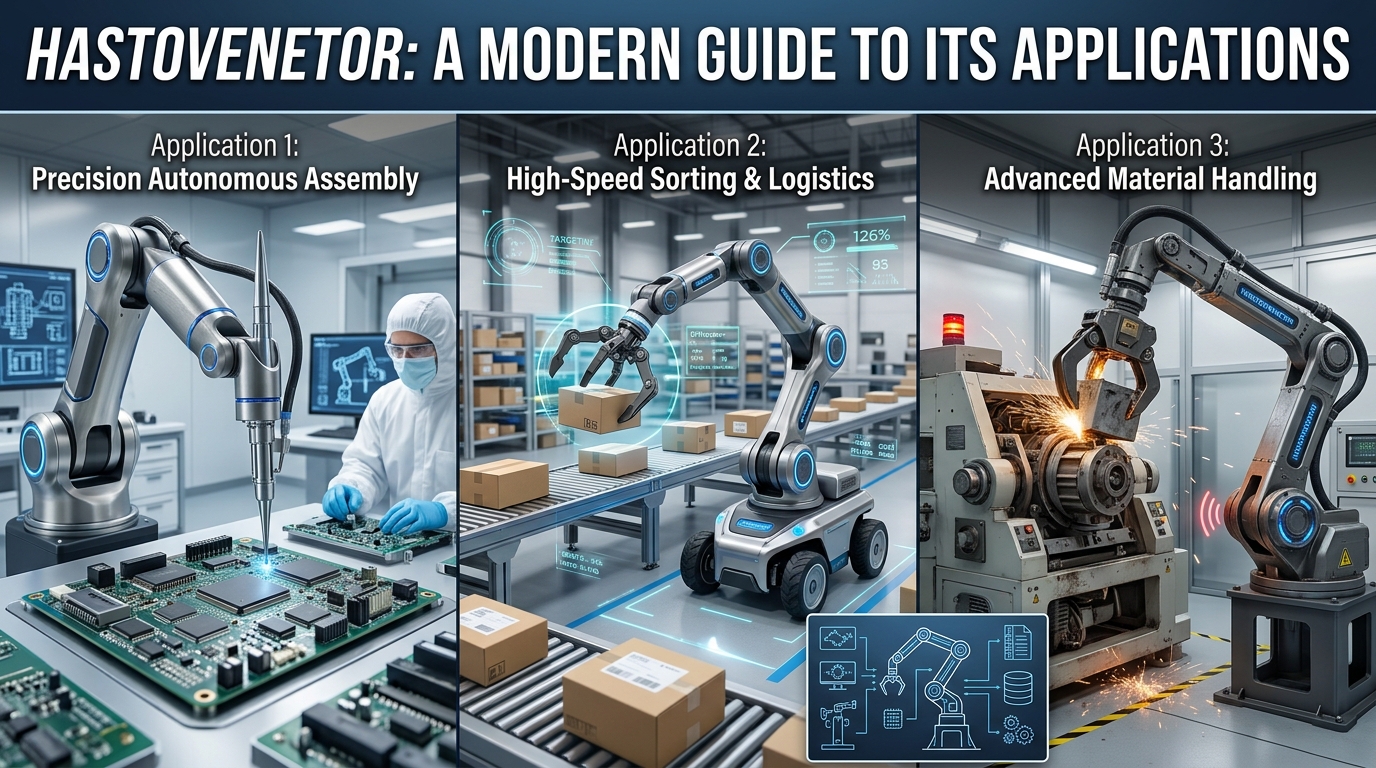
The practical applications of hasto-venetor extend across various sectors, including healthcare, education, and manufacturing. In healthcare, for example, hasto-venetor can be used to improve patient care through adaptive treatment plans and data-driven decision-making. In education, it supports personalized learning by allowing curricula to evolve based on student needs.
manufacturing, hasto-venetor contributes to the development of smart factories, where processes are continuously optimized through automation and real-time monitoring. These applications demonstrate the versatility of hasto-venetor and its potential to drive innovation across different industries.
Conclusion
Hasto-venetor represents a forward-thinking approach that combines adaptability, integration, and sustainability. Its relevance spans multiple domains, from business and technology to culture and creativity. By adopting hasto-venetor principles, individuals and organizations can navigate complexity more effectively and achieve long-term success.
While challenges exist,therefore they can be addressed through careful planning and a commitment to continuous improvement. As the world continues to evolve, hasto-venetor offers a valuable framework for embracing change and fostering innovation. Ultimately, understanding and applying hasto-venetor can lead to more resilient systems and sustainable growth in an increasingly dynamic environment.